
How it works
A calm helper on their computer, the family on their phones. Here is what it does on a normal day, and on the day a scammer calls.
Set up in three steps
-
You set it up on their computer
Their first name, who they should call when something looks wrong, and their language. It takes about two minutes.
-
You join from your phone
Scan the square on their screen or type the 6‑digit code. Brothers, sisters and grandchildren can join with the same code. Their computer asks before anyone new is let in.
-
It stays quiet until it matters
Most days it just helps. When money is about to move or a stranger tries to get into the computer, it pauses everything, explains why in plain words, and asks you. And when they're stuck, they can ask you: one button, Ask my family for help.
What it catches
These are the kinds of things scammers say: first what your parent sees or hears, then what their Geek does about it.
A pop-upYour computer is infected. Call this number now.
Tells them the warning is fake and not to call. Real warnings never ask you to phone anyone.
A phone call on speakerI'm from your bank. Move your savings to a safe account today.
Listens when they press Listen to my call, and puts up a stop card within a few seconds.
A stranger's programInstall this so I can fix your computer for you.
Any remote-control program that starts gets a stop card straight away, and the family is told.
An emailYour payment failed. Update your card within 24 hours.
Checks where the link really goes. A lookalike address gets a stop, in webmail and in the email program on the computer.
A lookalike websiteYour parcel is waiting. Pay a small fee to release it.
Spots addresses dressed up to look like a real company, before a card number is typed.
A money askBuy gift cards and read me the numbers. Or send it in crypto.
Pauses and asks the family. No real company asks to be paid this way.
A new friend onlineI feel so close to you already. Let me show you how I invest.
Gives a gentle caution early, before any money is mentioned. If the same chat keeps raising it over days, you get one kind heads-up, never the messages. Your parent hears about it first and can say "don't tell my family." This is the hardest kind to catch, and we're still improving it.
The examples are made up, but each kind is one your Geek is tested against. No tool catches everything, which is why the family gets the final say.
And on the other days, it just helps
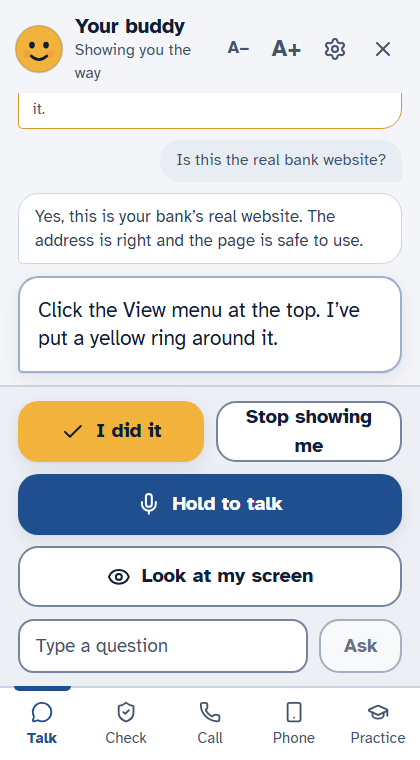
“How do I make the words bigger?” Your parent asks out loud or types it. Their Geek puts a yellow ring around the right button and goes one step at a time. It notices when the step is done and moves on.
It comes with more than 40 everyday how-tos, each in English and Spanish, and new ones arrive without updating the app.
It remembers the conversation, so a follow-up like “and now how do I print it?” just works. Talk over it, or press Stop talking, and it stops at once.
Not sure about a page? They press Look at my screen and their Geek checks that one picture.
If it sees them stuck, say the same error box sitting there or a print window opening again and again, it may offer help once, gently. Never during a call or a stop card, never while they're typing or talking, not overnight, and only a few times an hour. If they say “not now,” it stays quiet for a while. You can switch it off in setup.
Some things are quicker with a button than with steps. Their Geek can offer a card, such as open the right setting, check the computer's protection, or find and install a safe free program from a short list we have vetted. Nothing happens until your parent presses Yes. And the card says it plainly: if a stranger is asking you to press Yes on a Windows prompt, that is a scam.
Three ways it can help
Your parent may be the first to use it, but plenty of people who aren't old still call the geek in the family. You pick a mode in setup, and it can be changed later.
GuardianI'd rather not touch anything I don't understand.
Big text, every step shown, and it checks in often. Best when computers feel hard. This is where everyone starts.
HelperI can manage, I just want a hand.
A smaller window, fewer interruptions and short answers, with a one-button card where it fits. For confident people who aren't technical.
LearnerWhy does it do that?
Says why each step matters, and suggests a practice scam each week. For people who want to learn.
Scam protection is the same in every mode: their Geek still stops scams and tells the family when something is dangerous. It may suggest another mode, at most once a week, and it only changes if the person says yes.
Practice, like a fire drill
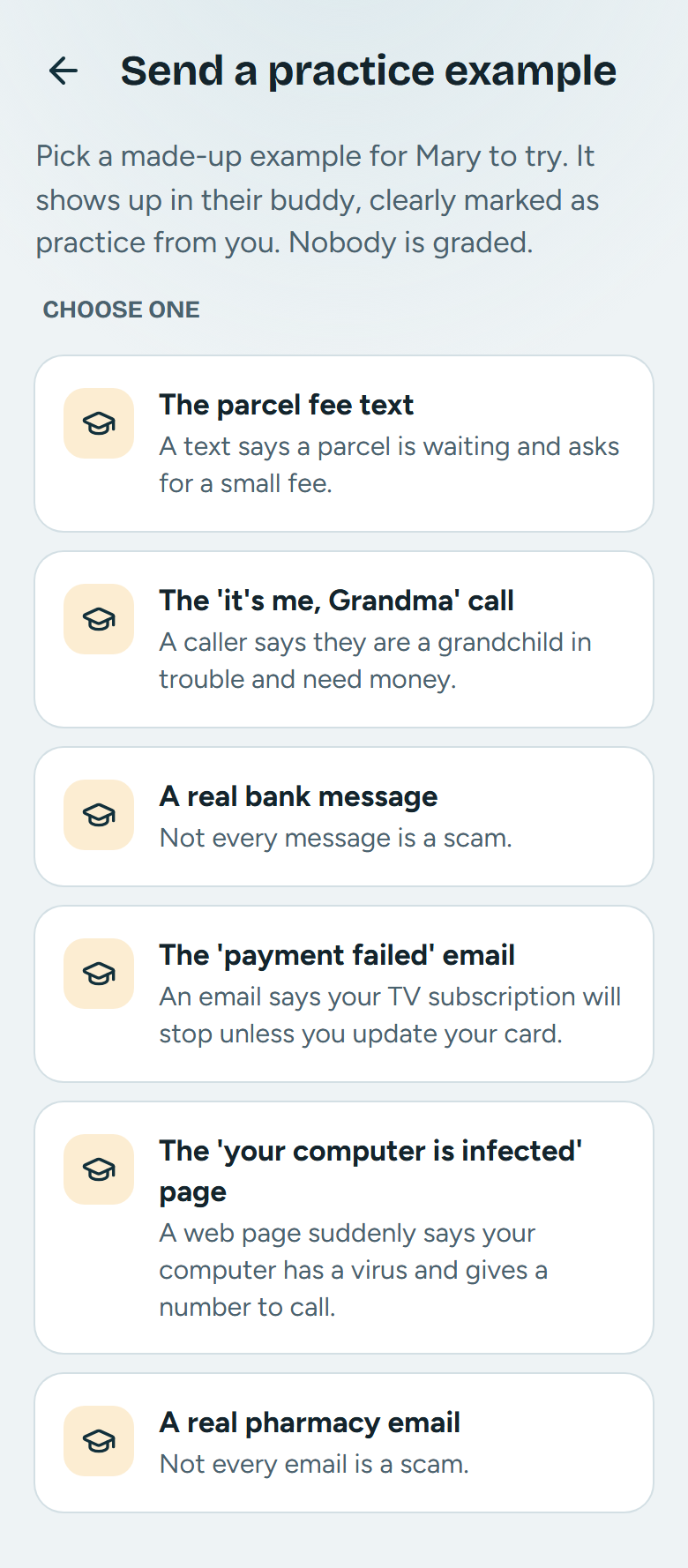
Their Geek has a Practice tab with made-up scams, clearly marked as not real. Your parent decides: scam, or looks fine? Either way, the feedback is kind.
You can send one from your phone, like the parcel fee text or the "it's me, Grandma" call. You'll see how it went. Nobody is graded. There are lessons on romance and investment chats too, because those take weeks, not minutes.
Some examples are real, ordinary messages, because not every message is a scam.
There is a lesson on the “press Yes” scam too, where a stranger talks someone into approving a Windows prompt. And a short What's new tour, with Try it cards, shows them each new thing their Geek can do, by doing it.
It goes with them, on their own phone
Your parent can connect their own phone to their Geek. After that it works from anywhere, on Wi-Fi or cellular data.
Check a message or a pictureIs this text from my bank real?
They send it from their phone and the answer comes back in plain words, with the same scam checks as on the computer.
Push to talkCan you read this one to me?
They hold a button and speak, or ask to have the answer read aloud. No typing on a small screen.
You are toldA phone was just connected as Mary's own.
The family sees it whenever a phone is connected as your parent's own. That phone can hand things to their Geek and read the answers. It can't see the family timeline or decide anything.
Their computer asks first (“Is this your own phone?”), so a stranger can't link one. If the computer is off, what they sent waits for it for up to a day.
Reserve a spot for your family
Pay nothing today. Free during the beta; you'll see the final price, and say yes, before anything is charged.